Why are we adjusting stops?
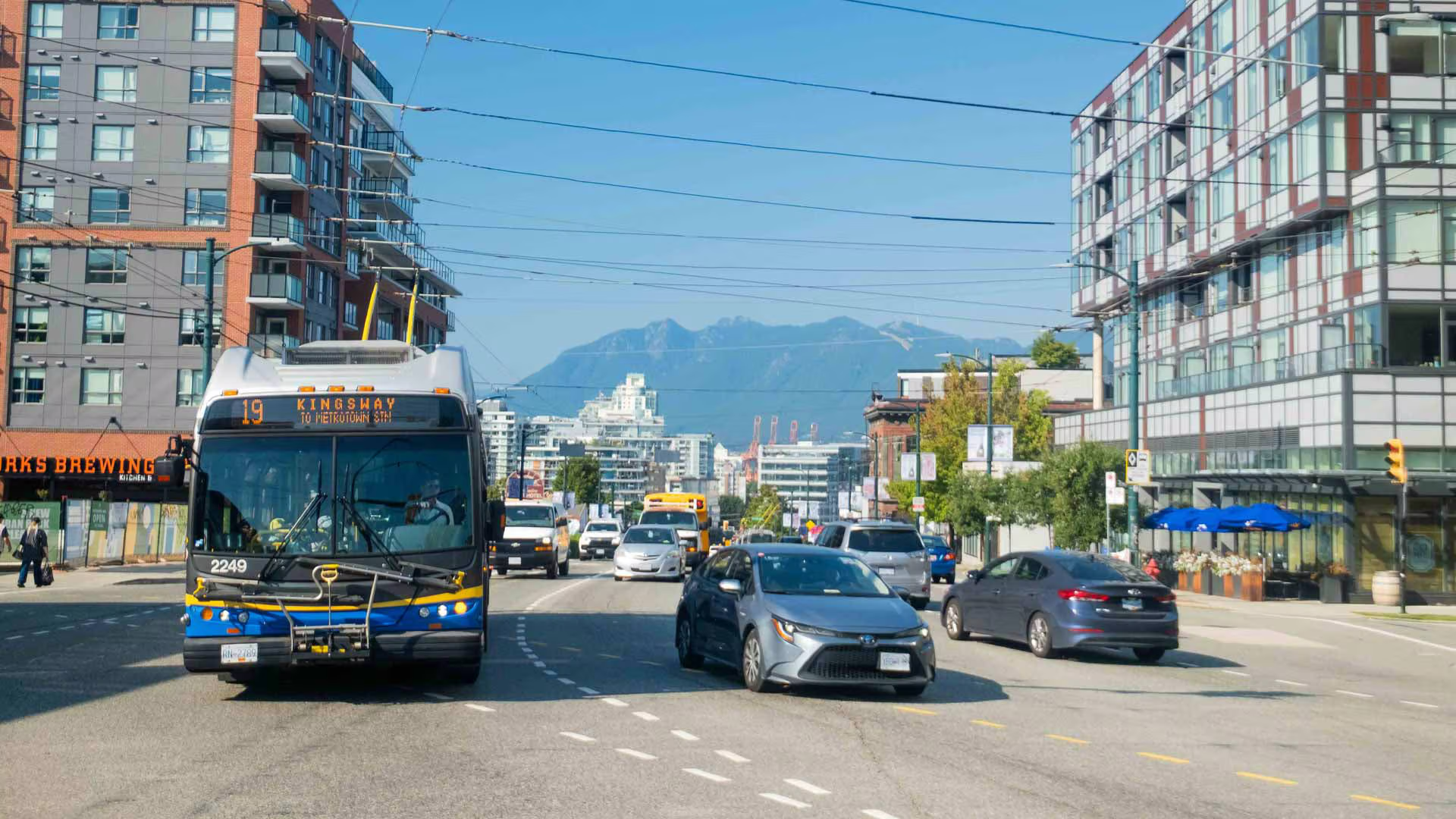
About 70 per cent of Route 19 stops are closer than the recommended 300 metres apart, contributing to a total of 112 stops per round trip. When stops are too close together, buses pull over more often, slowing down trips and making travel times harder to predict. By thoughtfully adjusting stop locations, buses can stay on schedule and move more people quickly and reliably.
How does TransLink decide which bus stops to remove?
To minimize impacts on customers, we carefully consider many factors when evaluating stops for removal. This includes accessibility, ridership, transfer points, nearby destinations, physical constraints (e.g. hills), spacing between stops on the route, and impacts on other routes. We also look at whether the stop had a twin stop in the opposite direction, nearby crosswalks, or stop amenities (e.g., shelters, benches). Finally, we consider locations where customers may benefit from the addition of a new stop, such as areas with higher populations of seniors with reduced mobility, as well as areas with larger spacing between current stops.
Where else has TransLink done bus stop balancing?
TransLink and the City of Vancouver worked together on a larger-scale bus stop relocation project from 2020 to 2022. Five bus routes where up to 80% of stops were under 300m were adjusted. More recently, we balanced some bus stops on Granville Street to improve travel times and reliability for customers.
How will this project be funded?
TransLink will support the bus priority measures through funding from the Bus Speed and Reliability Program.
Is TransLink making improvements to other routes?
TransLink has scheduled bus priority improvements along four additional corridors in Vancouver, targeting areas of high delay and high ridership. As part of its Bus Speed and Reliability program, TransLink intends to implement measures to improve travel times and service reliability for transit users.
What do TransLink service design standards say about the distance between our bus stops?
Adopted in 2018, the Transit Service Guidelines bring clarity and consistency to the process of adjusting and improving transit services to meet changing customer needs. In the guidelines, stop spacing is measured by dividing the total distance of a given route by the total number of stops on the route minus one. This measure provides average stop spacing in metres. While the average stop spacing on a line should fall between the ranges provided in the guidelines, the actual distance between any two stops on a route can vary, depending on such factors as topography, road design, land use, and location of sidewalks.
For all-day frequent routes, an average spacing of 300 to 800 metres is recommended. The average distance between Route 19 stops, between Boundary Road and Stanley Park is currently 271 metres. With our proposed changes, the average spacing will be 313 metres. You can view the distance between specific stops by clicking on them in the interactive map. See pages 24 to 25 of our Transit Service Guidelines for more information.
How does adjusting bus stop placements reduce overcrowding?
When bus stops are better spaced, service becomes more reliable, and buses are less likely to bunch together. Evenly timed buses result in a more even distribution of passengers. Time saved on routes allows resources to be used to increase service, helping manage overcrowding across the network.
I’m worried about the speed of buses in residential areas. Does extending the space between stops mean that buses will go faster?
The safety and security of our customers and employees is paramount to us. Bus operators are instructed to adhere to posted speed limits and operate safely at all times. Relocating bus stops involves consolidating and removing bus stops that are too close together to improve travel times and reliability for bus customers. This has no impact on the operating speed of buses.
How do TransLink’s bus stop optimizing plans compare with other regions?
Generally, Canadian and American bus stops are closer together than on other continents like Europe and Asia. Our target of over 300 metres matches the spacing in cities overseas with much higher transit ridership. Many cities in Canada and the United States like Pittsburgh, Portland, and Montreal optimize bus stop spacing. Los Angeles is currently reviewing and adjusting bus stop placements for their entire network, with a target of 320m to 480m spacing.