From Expo 86 to Everyday Essential: SkyTrain Marks 40 Years
For four decades, Metro Vancouver's driverless trains have helped shape where people live, how they move, and how the region grows
NEW WESTMINSTER, BC – For 40 years, the sound of a SkyTrain chime has been the backdrop to everyday life in Metro Vancouver. It’s been there for first concerts and first jobs, late-night rides home, airport goodbyes, and trips downtown.
What started with 21 kilometres of track has now grown to four times its original size. Today, SkyTrain is a rapid transit network that has quietly but consistently shaped how people live, work, and travel across the region. SkyTrain remains a cornerstone to regional planning, with new trains, new stations, and the most ambitious growth since its earliest days — including the incoming Broadway Subway and Surrey Langley SkyTrain.
The system’s importance is clear; last year the Expo and Millennium lines averaged nearly 349,000 weekday boardings, contributing significantly to the nearly 1.5 million weekday boardings across the entire transit network. TransLink now has the second highest per capita ridership in Canada, surpassing the Greater Toronto and Hamilton Area and ranking just behind Greater Montreal.
1980s: A Vision Takes Shape
In the early 1980s, Metro Vancouver was looking ahead to Expo 86 and searching for a way to show the world what kind of city it wanted to be. An automated rapid transit system with frequent trains, compact stations, steep grades, and a small footprint that could weave through dense urban areas matched that ambition.
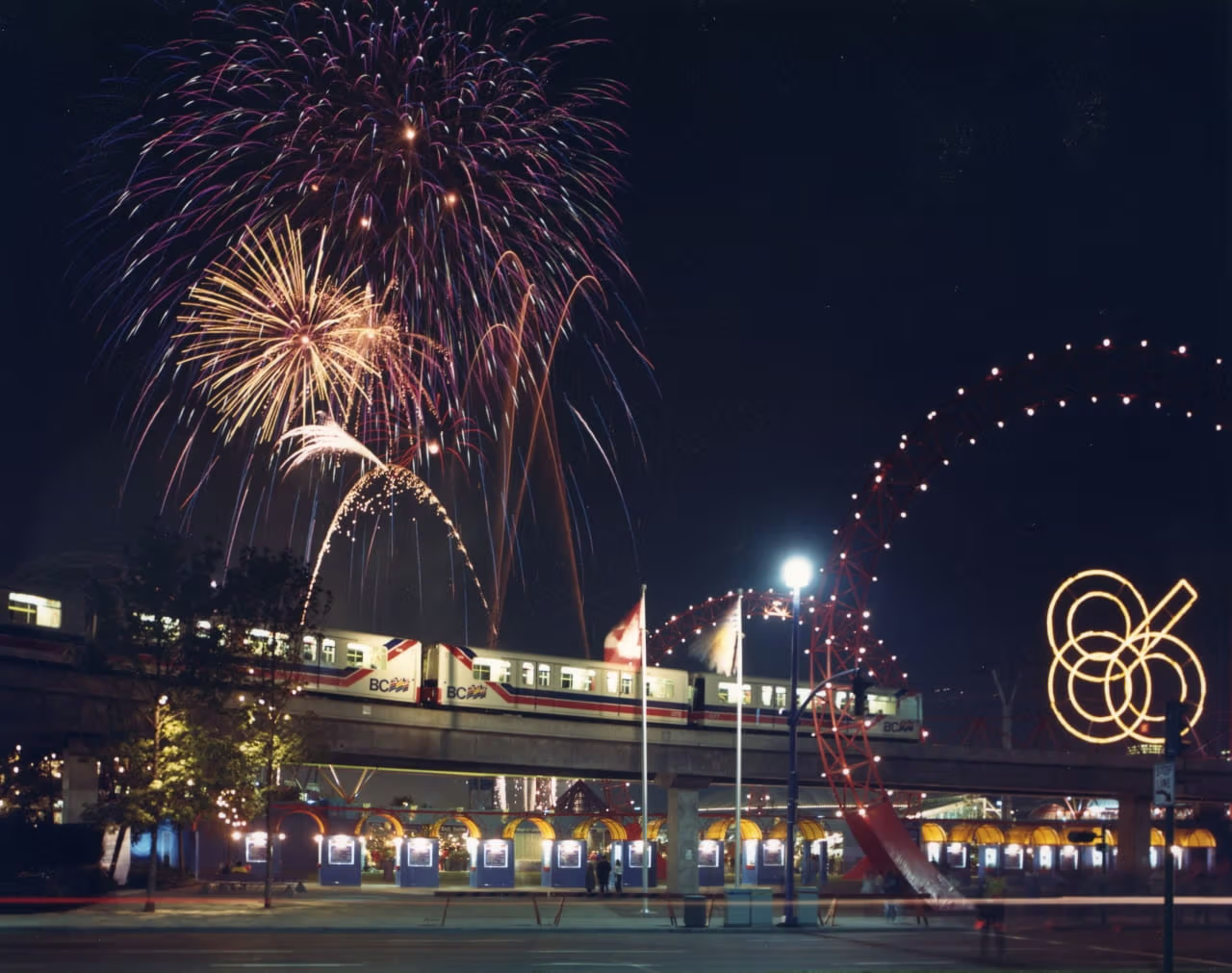
Before Expo even opened, the system launched with huge success after free test rides. Ridership in early 1986 quickly exceeded expectations, jumping from 40,000 daily riders in the first week of paid service to 50,000 by the end of the month, with Saturdays hitting 70,000 daily.
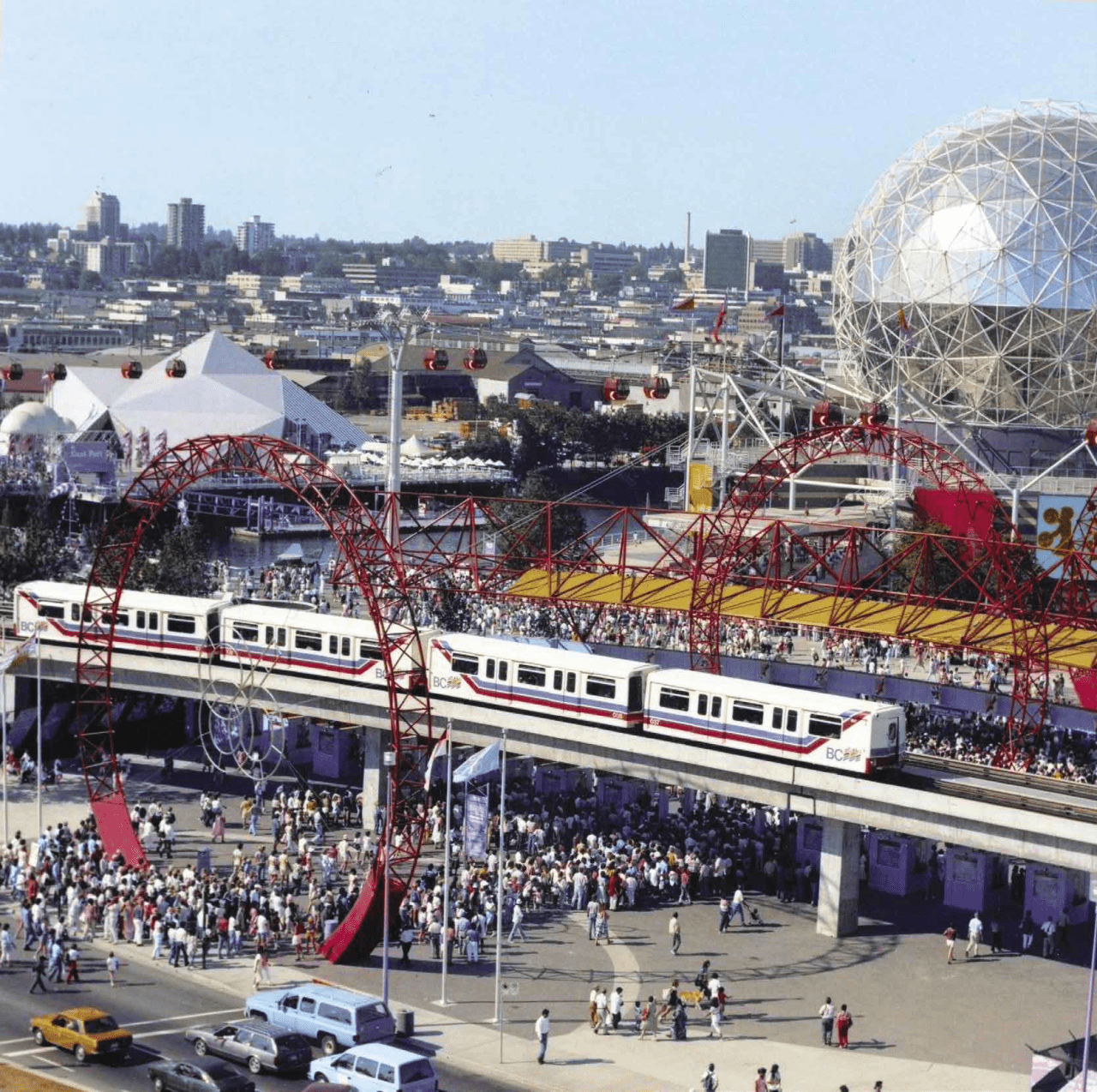
When the Expo officially opened on May 2, 1986, the SkyTrain was one of the most compelling attractions around. It was the world’s first fully automated driverless rapid transit system. For many, that was their first glimpse of a different kind of city: one built around fast and frequent transit.
SkyTrain’s popularity was highlighted by a royal visit from then-Prince Charles and Diana, Princess of Wales, as they toured the fairgrounds before the opening ceremony at BC Place. The royal couple traveled in car 014, which would later host the Prince and Princess of Belgium, as well as the Princess of Thailand upon future visits to Vancouver.
More than 22 million visitors attended Expo 86, helping to put Vancouver on the map, with the SkyTrain creating a lasting impression and memory for travellers from all over the world.
.avif?extension=avif&hash=7CDC6DFB2C4D8D34B9FE49B9BB222650)
1990s: Strengthening the Core
The first decade of SkyTrain set the stage, but the 1990s solidified its role as a backbone of people’s daily routines. New stations opened, including Columbia, Scott Road, Gateway, Surrey Central, and King George Station. Trains arrived more frequently, and neighbourhoods along the line began to change and take shape in a different way. The SkyBridge was constructed to connect the Expo Line to the new Surrey stations, establishing the region’s first rapid transit link across the Fraser River.
Areas like Metrotown transformed rapidly as higher-density development took hold. Mixed-use communities were built around access to transit rather than parking lots. It was an early example of transit-oriented development: build around SkyTrain, and people will choose to live and work there. That pattern has since shaped many of the region’s busiest town centres.
2000s: The Millennium Line
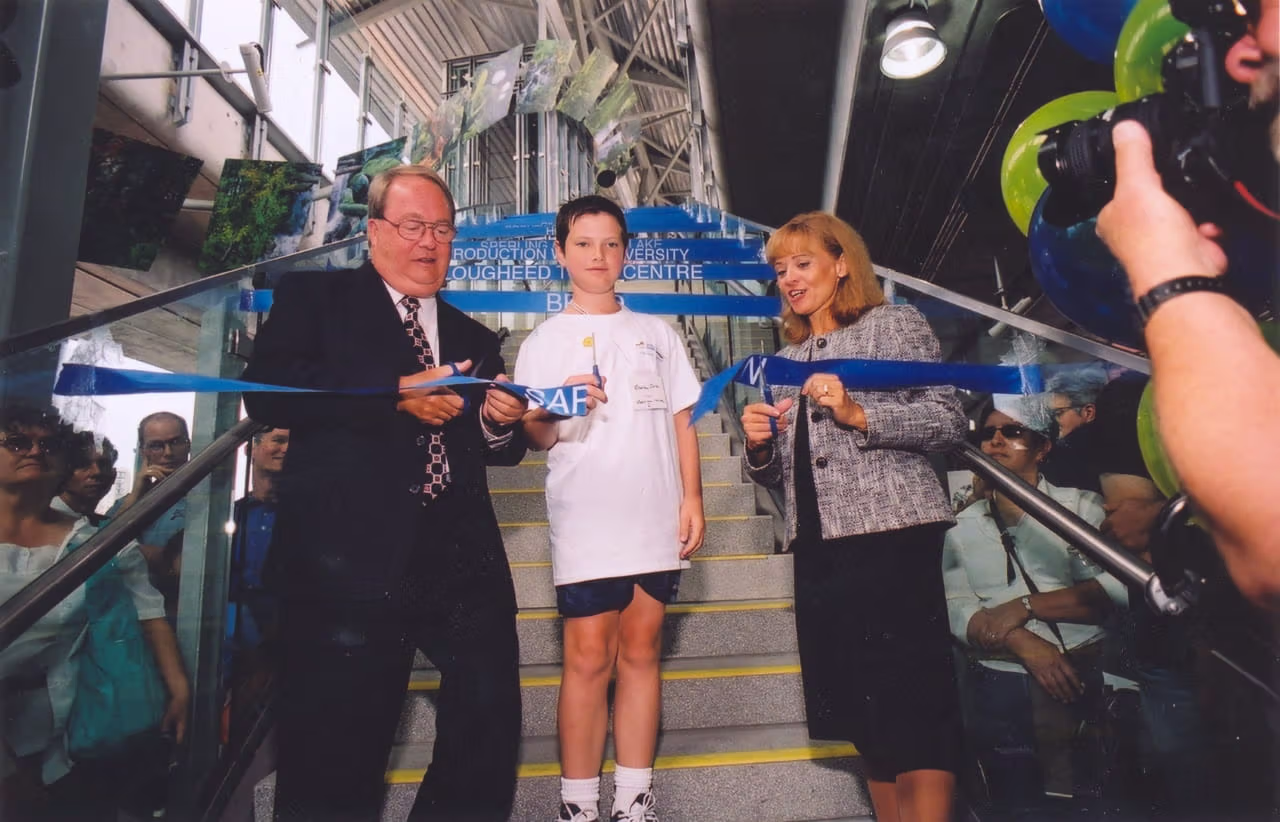
With the turn of the century came the most significant expansion in SkyTrain’s history yet. The Millennium Line opened in 2002 and marked a new chapter in Metro Vancouver’s growth strategy.
The opening day was electric, as customers explored new stations built with glass, greenery, public art, and distinctive architecture — including the uniquely-designed Brentwood Town Centre Station. The elaborate double-curved wood canopy, shaped to resemble a canoe, has won multiple awards, including the Governor General Medal in Architecture and the Lieutenant-Governor of British Columbia Award in Architecture.
The Millennium Line also introduced 60 new Mark II SkyTrain cars to the fleet, with three doors per side and articulated gangways between cars. This design feature became a standard for all future models.
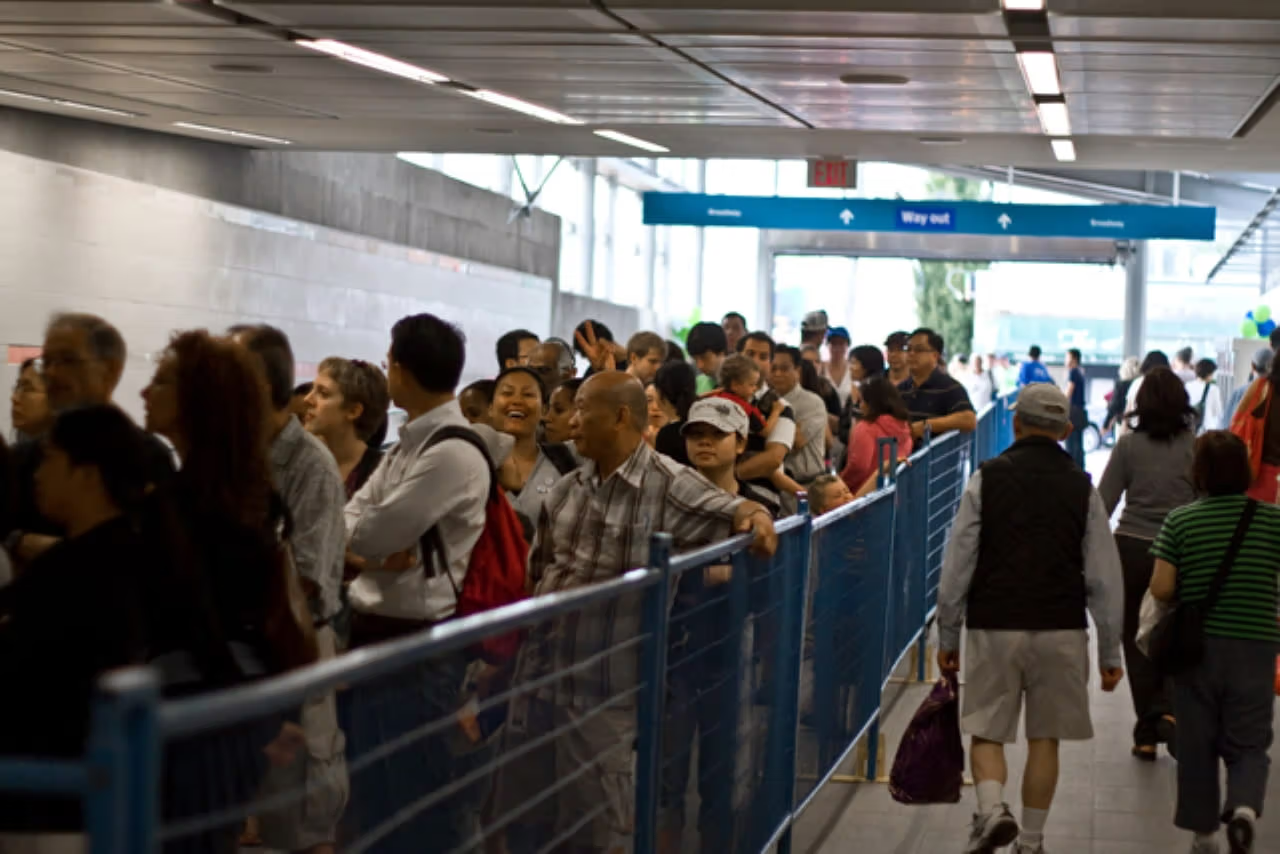
The Canada Line and 2010 Olympic Winter Games
In 2009, the Canada Line added another layer of connection. The 19.6-kilometre line through downtown Vancouver, along Cambie Street, and across the Fraser River required some of the most complex engineering in the region’s history. The project connected 16 stations across three separate water crossings, combining a mix of elevated, ground level, and underground track sections.
Upon opening in August 2009, it fundamentally changed how people moved between downtown, South Vancouver, Richmond, and the airport. Commuters had a new high frequency alternative to sitting in traffic. Visitors could step off a plane and be downtown in under half an hour.
The following year, the Canada Line was vital in the region’s ability to host the 2010 Olympic Winter Games. With nearly 2,600 athletes from 82 nations, and thousands of visitors from all over the world, rapid transit carried crowds to events, celebrations, and volunteer shifts. On February 19, 2010, the Canada Line set its single-day ridership record — with 287,000 trips. Those lessons in moving world-scale crowds are now helping inform planning for future major events, including the FIFA World Cup 2026.
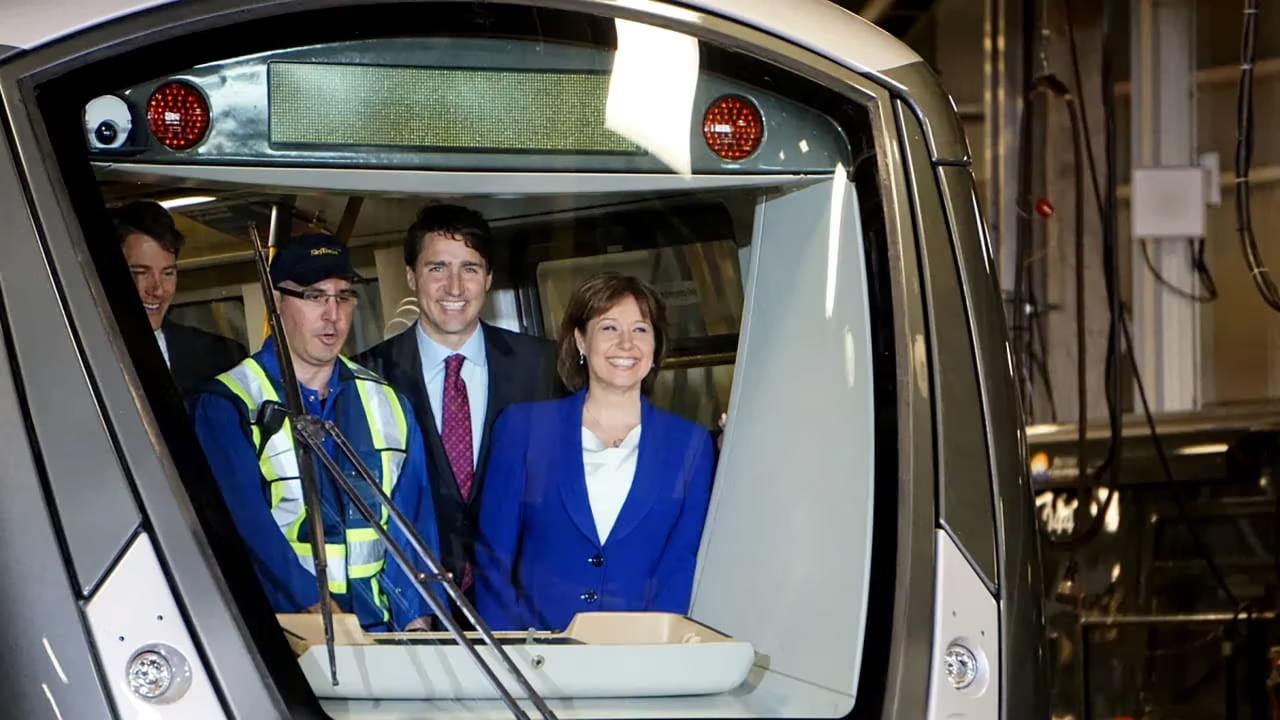
Mark III and the Evergreen Extension
In 2016, the Evergreen Extension connected the Millennium Line to Port Moody and Coquitlam. With this, SkyTrain became a truly regional system. It has supported the Tri-Cities’ growth by providing stronger connections for students, families, and local businesses. In 2024, the six stations along the Evergreen Extension (Burquitlam, Moody Centre, Inlet Centre, Coquitlam Central, Lincoln, and Lafarge Lake–Douglas Station) averaged nearly 20,500 boardings every weekday.
Summer 2016 also brought the launch of the Mark III SkyTrain car. With wider walk-through interiors, updated seating layouts, and enhanced accessibility features, the Mark III signaled the next evolution of the fleet and prepared the system for growing ridership.
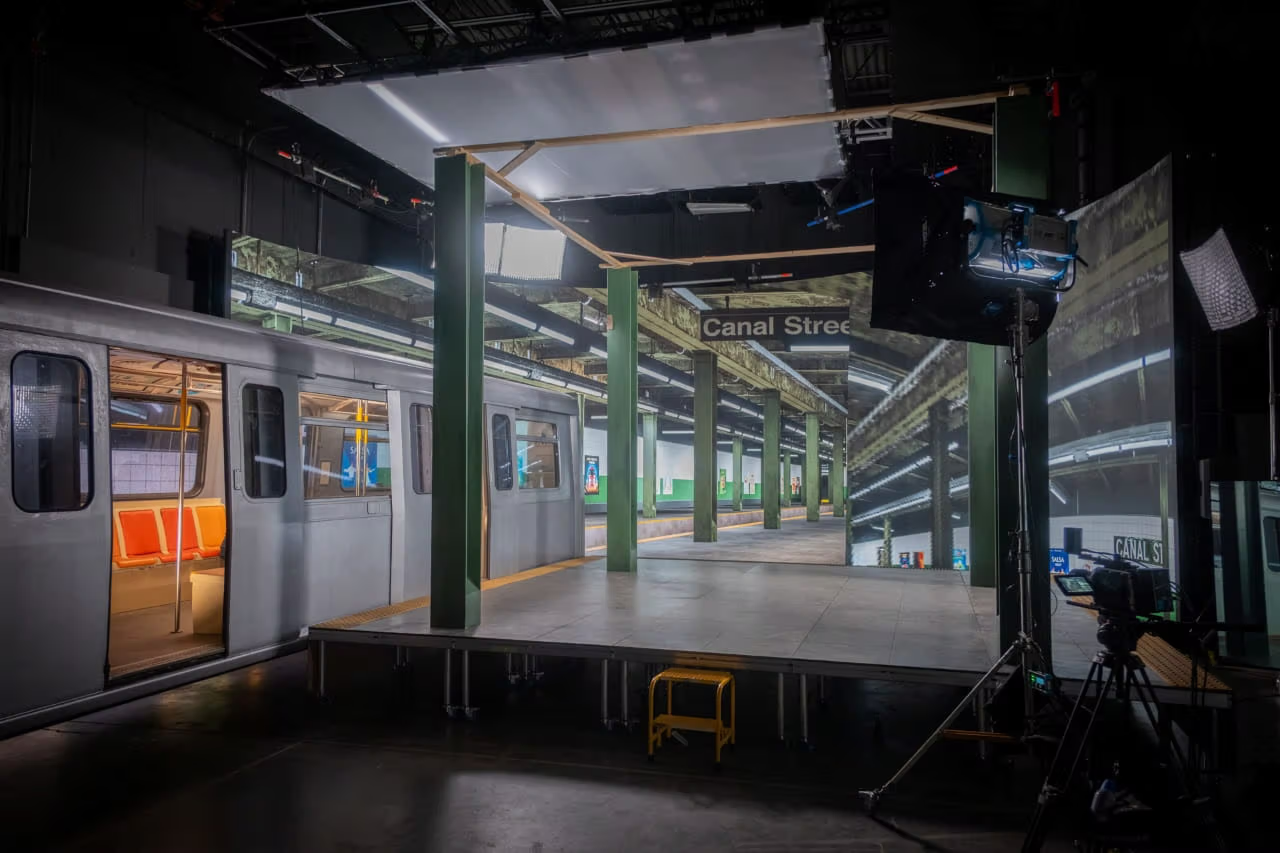
Influencing Metro Vancouver
Over four decades, SkyTrain has done more than cut commute times. It’s been instrumental in shaping the region’s urban configuration, and even its culture. Movies, TV shows, and music videos have used SkyTrain cars and stations as a backdrop. Examples include Blade Trinity, Friday the 13th Part VIII, The X-Files, Skyscraper, Smallville, and 21 Jump Street (1989). Vancouver-born actor and comedian Seth Rogen became a featured guest voice on SkyTrain when he recorded a series of etiquette announcements in 2018. And now a retired Mark I train is being used as a movie set locally at Lumostage Virtual Production in Langley, attracting filmmakers from all over the world.
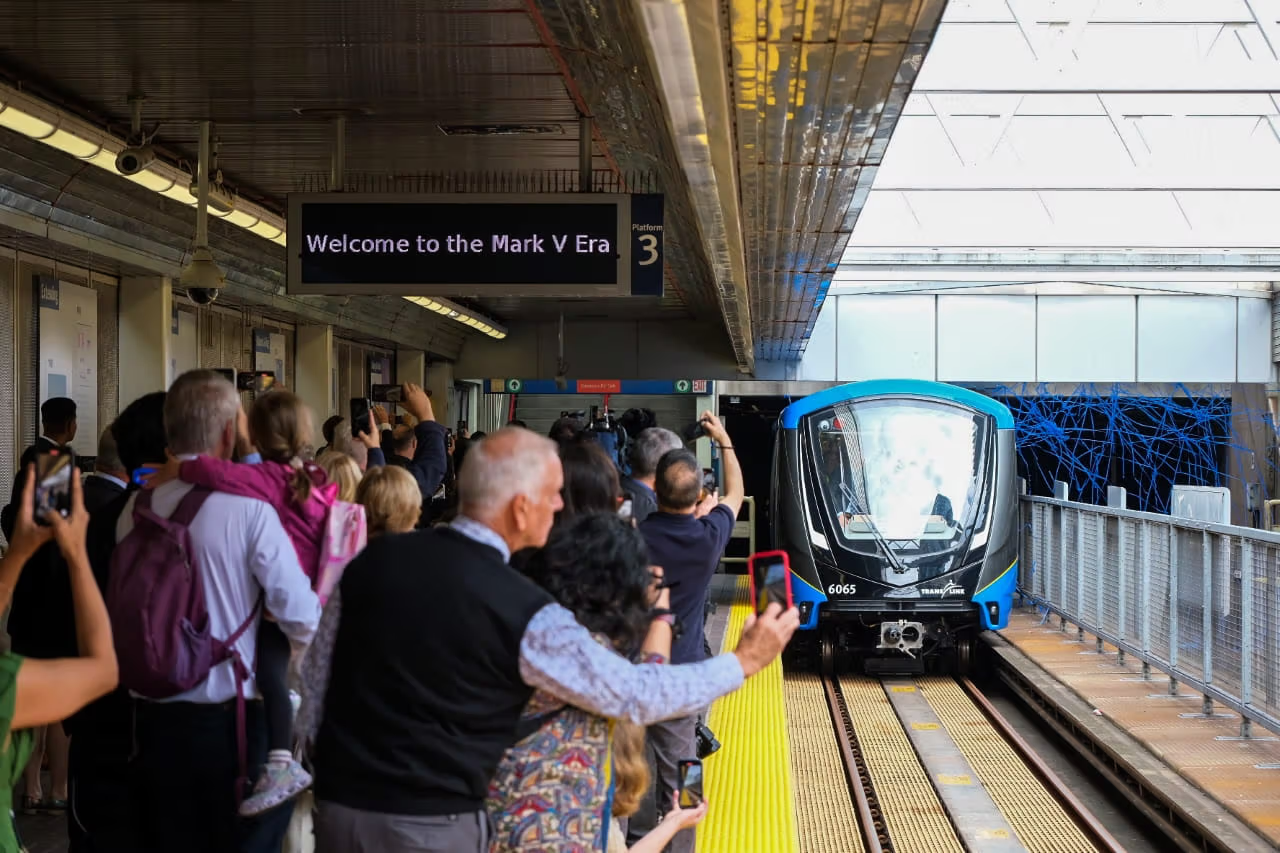
Today and Tomorrow
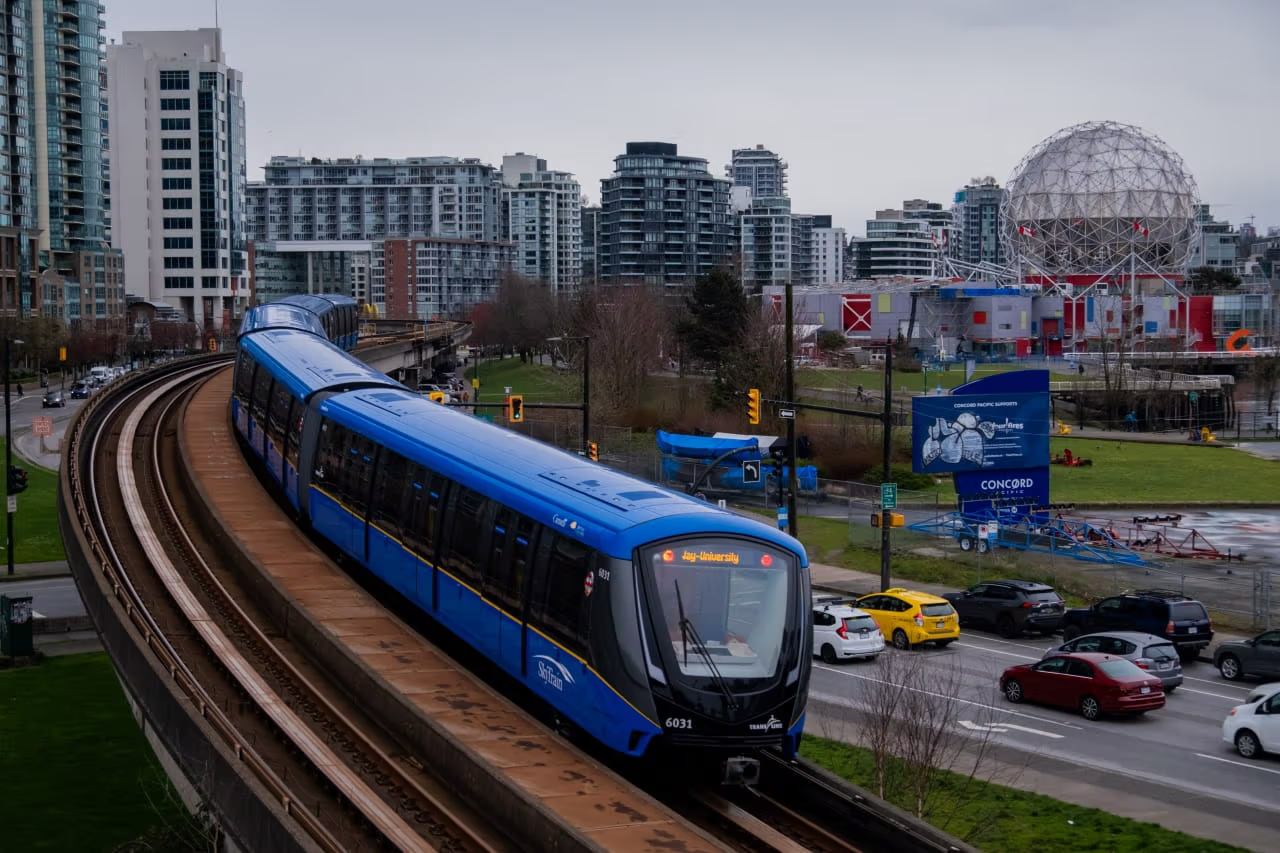
Today, SkyTrain is entering an era of renewal and expansion. New Mark V trains are beginning service on the Expo Line, offering more space, improved accessibility, and a smoother ride. There are currently four Mark V trains running on the Expo Line, with 43 additional trains scheduled to enter service by 2029. The Mark V is proudly made in Canada. They are manufactured by Alstom in La Pocatière, Quebec, and then tested in Kingston, Ontario. The train cars are delivered to Metro Vancouver on flatbed trucks across the Trans-Canada Highway, spanning a 4,600-kilometre cross-country trek.
Each Mark V train features striking Indigenous artwork on its interior windscreens. The pieces were created by acclaimed artists Rain Pierre of q̓ic̓əy̓ (Katzie First Nation), Atheana Picha and Brandon Gabriel of qw̓ɑ:nƛ̓ə̓n̓ (Kwantlen First Nation), Darryl Blyth of xʷməθkʷəy̓əm (Musqueam), and Rose Williams of Sḵwx̱wú7mesh Úxwumixw (Squamish Nation).
Major expansions are also in progress. The 16-kilometre Surrey Langley SkyTrain extension will be the largest expansion of rapid transit south of the Fraser. Eight new SkyTrain stations at Green Timbers, 152 Street, Fleetwood, Bakerview-166 Street, Hillcrest-184 Street, Clayton, Willowbrook and Langley City Centre Station will connect these growing communities to the transit network.
Meanwhile, the 5.7-kilometre Broadway Subway will carry the Millennium Line through Vancouver’s health, education, and tech corridor into Kitsilano. Six new underground SkyTrain stations at Great Northern Way-Emily Carr, Mount Pleasant, Broadway-City Hall, Oak-VGH, South Granville and Arbutus Station will provide a faster connection across Broadway, one of North America’s busiest traffic corridors.
Together, these projects will add 21.7 kilometres to the system — more than the original SkyTrain line when it opened.
SkyTrain began as a bold idea, introduced on a world stage by a region imagining what its future could be. Over time, that idea became something more: a shared experience that spans decades and generations. As SkyTrain enters its next chapter, it stands ready to provide new journeys and memories, just as it has since the beginning.
Quotes:
Kevin Quinn, CEO, TransLink
“Celebrating forty years of SkyTrain reminds us just how far this bold Expo 86 idea has come. Today it stands among the world’s longest fully automated networks, shaping how cities everywhere approach urban mobility. As we mark this milestone, I’m excited for how the next phase of the system will keep Metro Vancouver at the forefront of modern, climate-focused transportation.”
Sany Zein, President and General Manager, BC Rapid Transit Company
"The legacy of SkyTrain has been built and delivered on the shoulders of the amazing team that keep our system moving. As our system continues to grow, we will need skilled and trained workers to help shape the future of SkyTrain and the next 40 years of reliability and innovation. I want to thank everyone who has played a role in making the SkyTrain so successful.”
Mike Richard, Vice President of Operations, BC Rapid Transit Company –
"SkyTrain has been more than just a workplace, it has been my second home for over 40 years. I started before construction had finished and have watched stations rise, trains evolve, and communities flourish around our SkyTrain system, in areas I played in as a child growing up in the 1960s. Being a part of this story, working with amazing people from the very beginning has been a great privilege, and something I will always treasure."
More information:
SkyTrain Expansion Program
Media downloads:
Archive of SkyTrain photos here
Media contact:
TransLink Media Relations
E: media@translink.ca